
Citric Acid Anhydrous Powder: Properties, Benefits and Applications
Citric acid anhydrous is one of the most versatile ingredients used across food, pharmaceutical, nutraceutical, and personal care formulations. As a dry, stable, and highly soluble organic acid, it provides functionality ranging from pH control and buffering to effervescence, preservation, and flavour enhancement. By reducing and controlling particle size, additional pathways open up for more specialised and technically demanding applications.
Below, we explore what makes Citribel’s citric acid anhydrous powder distinct, including its production process, key functional properties, and applications across multiple industries.
What Is Citric Acid Anhydrous Powder?
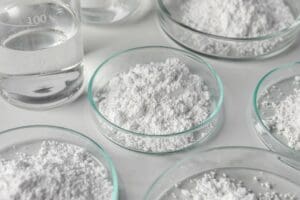
Citric acid anhydrous is the water-free form of citric acid. While citric acid monohydrate contains one water molecule in its crystal structure, the anhydrous form is fully dehydrated, yielding a fine, free-flowing, white crystalline material.
By reducing the particle size in a controlled manner, several functional advantages can be achieved:
-
Enhanced stability in dry (powder) blends
-
Improved aesthetics in food and cosmetic formulations
-
Faster dissolution in instant pre-mixes
-
Improved technical performance in dosing and automated processing
Because of these characteristics, citric acid anhydrous powder is widely used in dry food and cosmetic blends, effervescent tablets, cleaning agents, and other technical applications.
How Is Citric Acid Anhydrous Powder Produced?
At Citribel, citric acid is produced in Belgium using a surface-fermentation process.
Molasses, a by-product of sugar production, is used as the fermentation feedstock. After fermentation, the citric acid is extracted, purified, and crystallised into either monohydrate or anhydrous grades. The anhydrous grades are obtained through controlled dehydration, resulting in stable crystals suitable for high-performance applications.
This circular production approach ensures:
-
Consistent product quality
-
A secure European supply
-
Valorisation of side streams
-
Reduced environmental impact
The powdered anhydrous grade is produced using a dedicated, in-house developed technique, designed to obtain a dry, fine powder with reduced caking sensitivity.
Key Functional Properties of Powdered Citric Acid Anhydrous
1. Homogeneous Powder Blends
Optimised particle size distribution improves compatibility with other powders, reducing segregation during transport and handling.
2. Improved Aesthetics and Functionality
Fine powder grades enhance organoleptic properties in food, prevent grittiness in beverages, and support smooth textures in cosmetic creams and gels.
3. Increased Technical Performance
The increased surface area results in faster dissolution and more efficient chelation behavior.
4. Easier Processability
The free-flowing powder supports predictable material behaviour and improved control in automated dosing and processing systems.
Applications Across Key Industries
Food and Beverage
Citric acid anhydrous powder is commonly used for:
-
Flavour enhancement in confectionery and bakery products
-
Acidification of carbonated beverages and ice creams
-
Stabilisation of colour and texture in dairy and meat applications
-
Antioxidant synergy in fruit juices
The powder form allows uniform blending in instant beverage powders, such as sports drinks, where rapid dissolution without sediment formation is required. Selecting a fine particle size also improves organoleptic perception in dry blends.
Pharmaceuticals and Nutraceuticals
In pharmaceutical and nutraceutical formulations, citric acid anhydrous plays an important role in:
-
Effervescent tablets and sachets
-
Powdered oral rehydration solutions
-
pH regulation in liquid and solid formulations
-
Syrups and suspensions
Particle size is a critical parameter, influencing both tablet compactability and disintegration behaviour. Selecting the appropriate granulometry allows formulators to optimise tablet quality during manufacturing as well as dissolution performance for the end user.
Personal Care & Household Products
Citric acid anhydrous powder is used as a natural acidifier, chelator, and preservative booster in:
-
Shampoos and conditioners
-
Bath bombs and other effervescent products
-
Skincare formulations
-
Cleaning powders and dishwasher tablets
-
Descaling agents
The stable, non-clumping powder format ensures good flowability during production and storage in dry blends and sachets. In skincare applications, citric acid contributes to exfoliation and pH adjustment, while its chelating properties support descaling and cleaning performance in household products.
Why Choose Citribel's Citric Acid?
Sourcing citric acid anhydrous from Citribel’s Belgium-based production offers:
-
A reliable and traceable European supply
-
High and consistent quality standards
-
Shorter lead times
-
Testing according to current pharmacopeial requirements
-
Full compliance with EU regulations
Local production and circular processing ensure stable availability and consistent performance.
Caking Behaviour of Citric Acid Anhydrous Powder
Caking sensitivity is a common concern for citric acid powders, particularly under humid conditions. Anhydrous grades are generally less prone to caking due to the absence of crystal water. In addition, Citribel applies a dedicated in-house technique to further reduce lump formation and improve resilience during transport and storage.
As a result, manufacturers often select Citribel’s anhydrous powder for:
-
Improved warehouse stability
-
Better performance in automated filling lines
-
Reduced risk of lump formation in dry blends
Conclusion
Citric acid anhydrous powder is a multifunctional ingredient offering reliable performance in dry blends, effervescent systems, food and cosmetic formulations, and technical applications. Its stability, solubility, and controlled particle size make it well suited for formulators seeking consistent, free-flowing materials.
Produced in Belgium using a circular fermentation process, Citribel’s citric acid anhydrous delivers dependable quality, local supply security, and performance tailored to demanding applications.
Frequently Asked Questions about Citric Acid Anhydrous Powder
What is the difference between citric acid anhydrous powder and citric acid monohydrate?
Citric acid anhydrous powder does not contain crystal water, whereas citric acid monohydrate contains one water molecule per crystal. As a result, the anhydrous form is generally more suitable for dry blends, effervescent systems, and moisture-sensitive applications, offering improved stability and faster dissolution under controlled conditions.
Why is particle size important for citric acid anhydrous powder?
Particle size influences several critical performance parameters, including flowability, blending homogeneity, dissolution speed, compactability, and segregation behaviour. Fine, well-controlled particle sizes allow formulators to optimise processing performance and end-product quality, particularly in tablets, instant powders, and cosmetic formulations.
Is citric acid anhydrous powder less prone to caking?
Citric acid anhydrous powder is typically less prone to caking than hydrated forms due to the absence of crystal water. However, caking behaviour still depends on factors such as particle size distribution, packaging, humidity, and storage conditions. Production techniques and powder engineering play an important role in improving resistance to lump formation.
In which applications is citric acid anhydrous powder preferred over granular grades?
Powdered citric acid anhydrous is preferred in applications requiring fast dissolution, uniform blending, or smooth textures, such as instant beverages, effervescent tablets, cosmetic creams, cleaning powders, and dry premixes. Granular grades may be selected where controlled dissolution or reduced dust formation is required.
Can citric acid anhydrous powder be used in pharmaceutical and nutraceutical formulations?
Yes. Citric acid anhydrous powder is widely used in pharmaceutical and nutraceutical applications, including effervescent tablets, sachets, oral rehydration solutions, and pH adjustment systems. Particle size selection is critical to ensure appropriate compactability, disintegration, and dissolution behaviour.
How is citric acid anhydrous powder produced in a circular process?
Citric acid can be produced via surface fermentation using renewable feedstocks such as molasses, a by-product of sugar production. After fermentation, the citric acid is purified, crystallised, and dehydrated to obtain the anhydrous form. Circular production focuses on resource efficiency and valorisation of side streams.
Is citric acid anhydrous powder suitable for food, cosmetic, and household applications?
Citric acid anhydrous powder is commonly used across food, personal care, and household product formulations. It functions as an acidulant, chelator, flavour enhancer, pH regulator, and performance booster, depending on the application and formulation design.