From mycelium to citric acid, citrates & more
At Citribel, production is a carefully managed ecosystem of interconnected stages and streams. Working with a living fungus is both a challenge and an opportunity, every cycle allows us to refine and improve. With extensive data analysis and continuous live monitoring, we ensure consistent citric acid, citrates and mycelium production, delivering reliable quality every time.
The fermentation process
From sugar molasses to citric acid
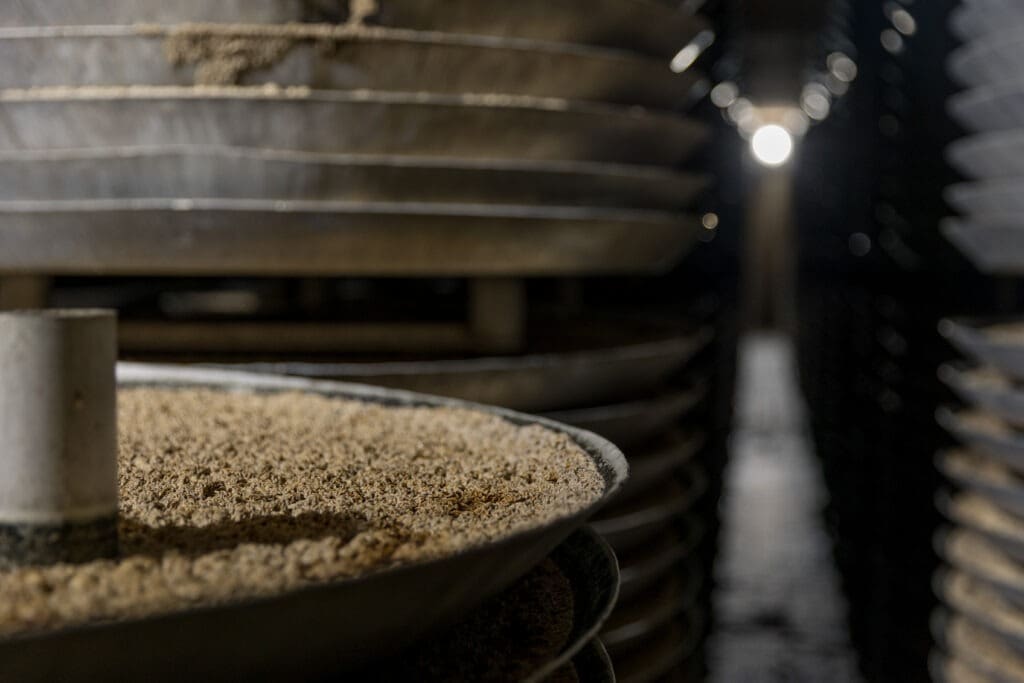
Sugar molasses, the largest sidestream from sugar refineries, serve as the ideal nourishment for our “Citribel fungus.” During fermentation, the fungus forms long fibres known as mycelium, which convert the sugars in the molasses into liquid citric acid.
In our 184 fermentation chambers, we carefully monitor and adjust key factors such as temperature, humidity, and surface tension to ensure stable and efficient conversion. After a few days, when most of the sugar has been consumed, the mycelium and citric acid are gently separated. The next step? Downstream processing.
Learn more about our products.
Downstream processing
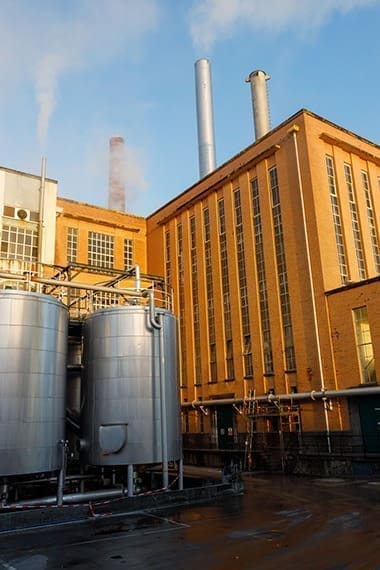
The liquid citric acid stream flows into a series of interconnected processes that influence and reinforce one another. Through separation, purification, crystallization, and drying, we obtain not only citric acid, but also valuable co-products such as potassium calcium salt, citrates, vinasse and gypsum.
With the help from our experts
It is hard to overstate the amount of expertise, dedication, and organization it takes to finetune this living ecosystem.